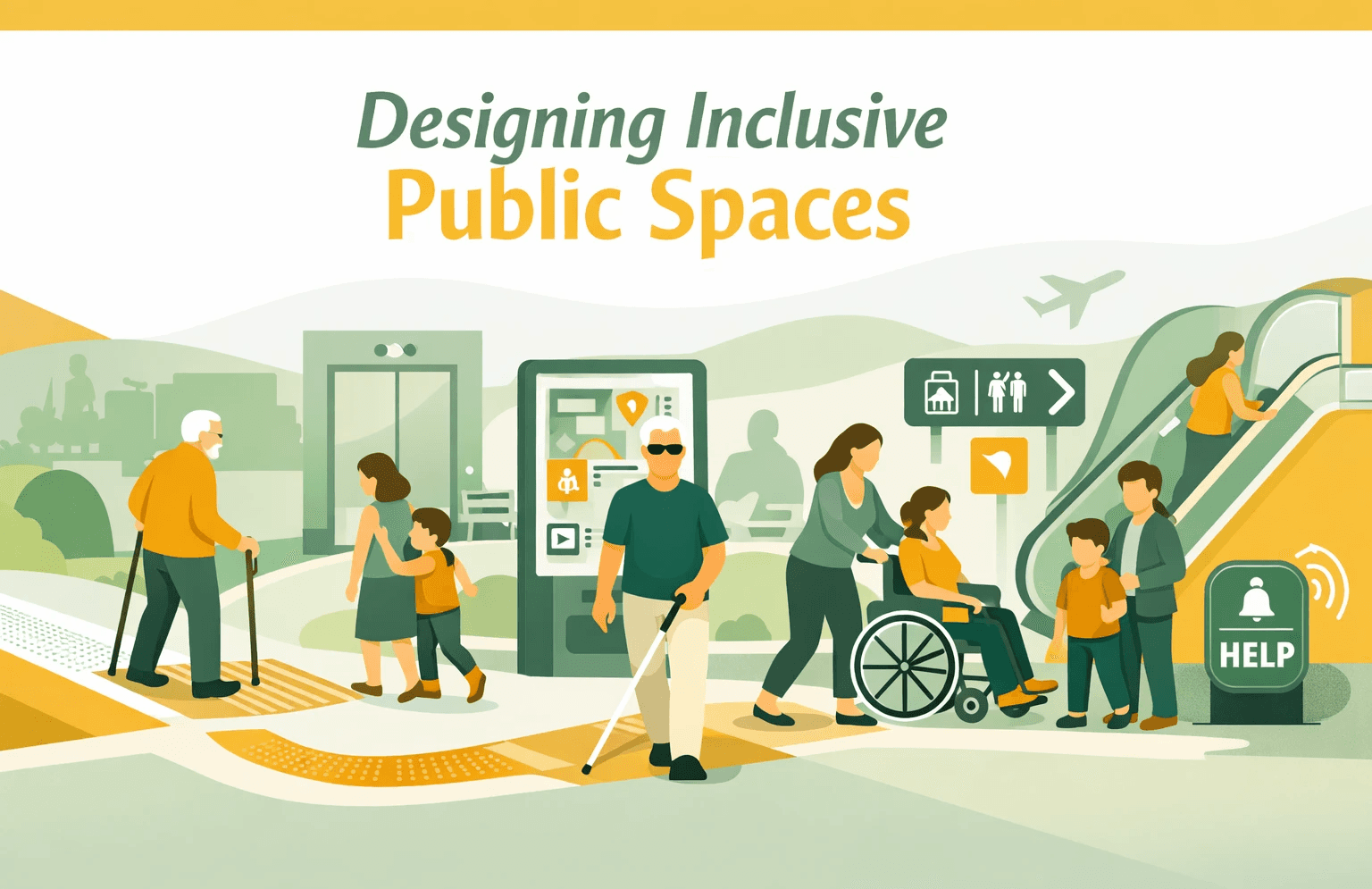
I once noticed how something as simple as entering a public building can feel overwhelming, especially if you’re elderly, disabled, visiting for the first time, or caring for someone who is. Hospitals, government offices, and transit hubs in India often expect people to figure things out on their own. Clear signage is rare, accessible paths are inconsistent, and asking for help becomes the default.
So, in a one-day design sprint, I explored a simple question:
What if public spaces were designed to guide people calmly and independently no matter their ability?
I began by mapping everyday pain points: unclear wayfinding, long walking distances without rest, inaccessible entrances, and the anxiety of not knowing whether you’re going the right way. These moments don’t just slow people down, they create stress, dependence, and safety risks.
From there, I imagined a more human-centered experience.
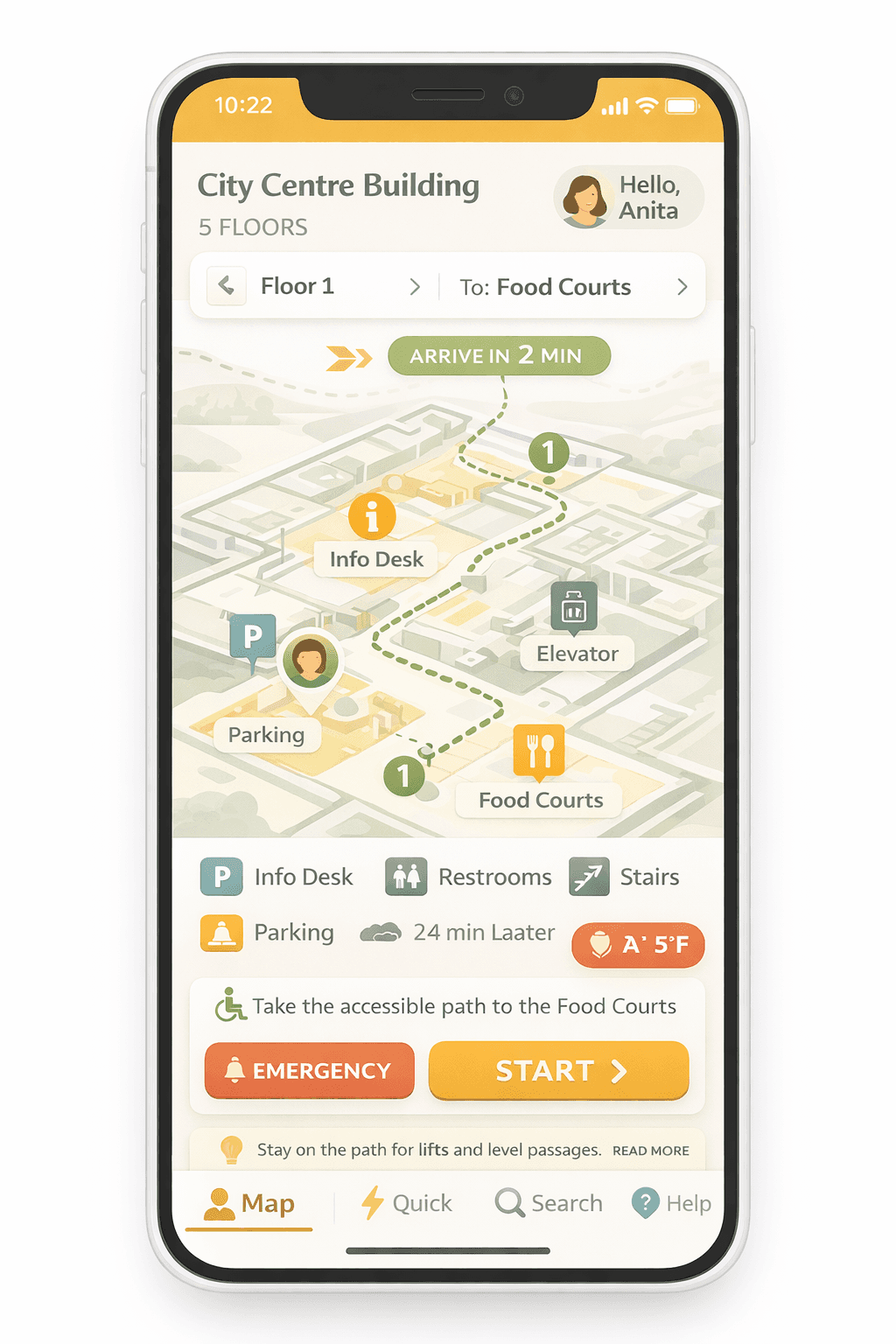
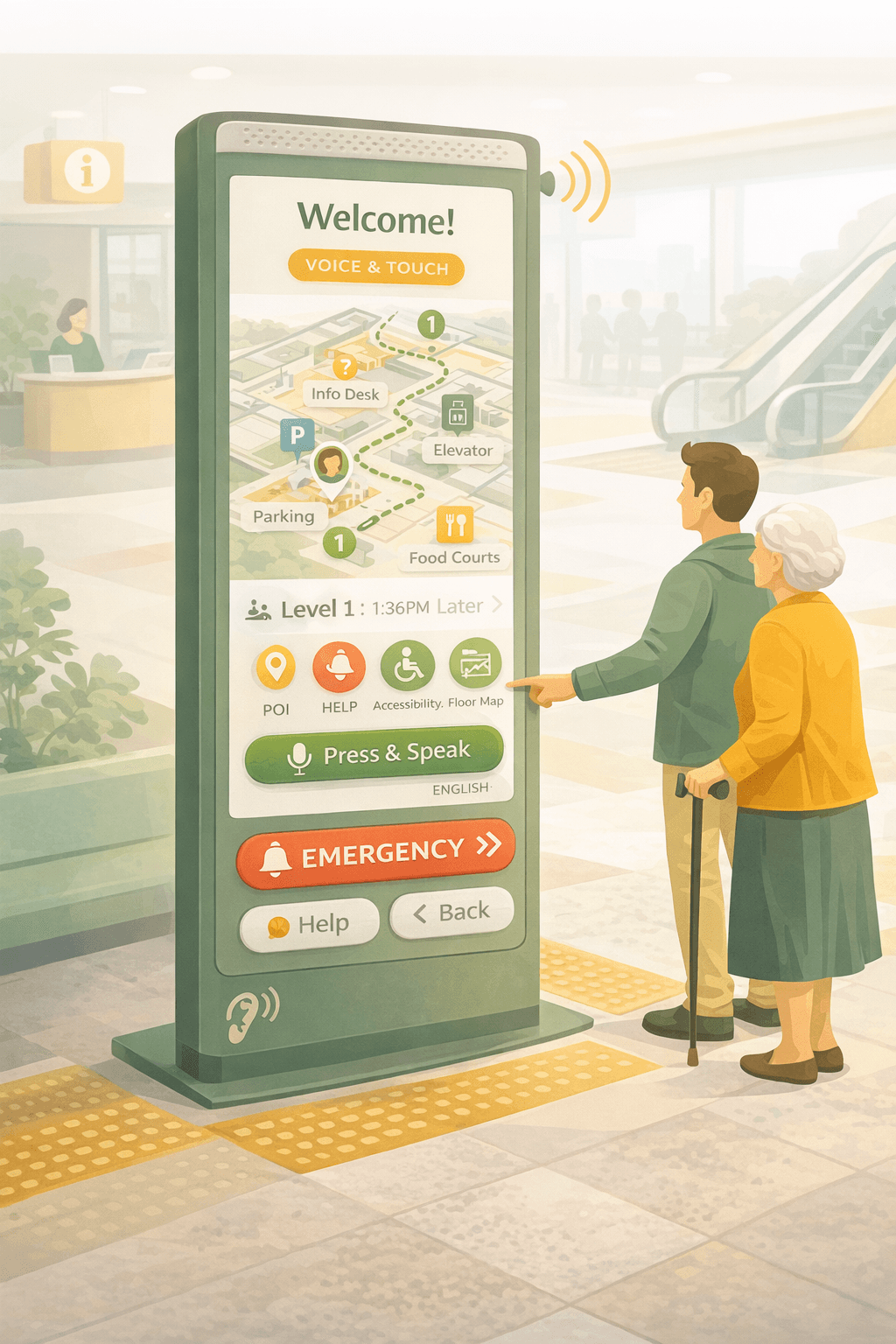
Physical spaces would include barrier-free paths, gentle ramps, tactile paving, benches every few meters, and predictable, high-contrast signage with braille and pictograms. Digital kiosks at key points would offer voice-enabled maps, emergency help, and real-time guidance. A companion app would allow users or caregivers to plan accessible routes in advance and receive step-by-step reassurance while navigating.
Early feedback shaped the idea further. Users wanted fewer steps to get started, constant reassurance, and visible help options. In response, I simplified flows, added landmark-based guidance, persistent “Need Help” buttons, and clear indicators for verified, working facilities like lifts and ramps.
This idea isn’t about technology alone - it’s about dignity.
Designing public spaces that quietly support everyone, without making anyone feel like an exception.
 |  |
|---|
Share with